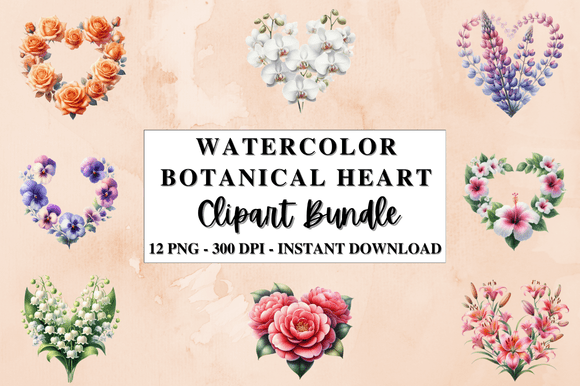
Watercolor Botanical Heart Clipart
As a designer with years of experience in embroidery and digital product creation, I always approach new clipart with a critical eye. Watercolor Botanical Heart Clipart caught my attention for its soft, artistic vibe and the promise of versatility. After testing it in several real-world scenarios, I’m ready to share my thoughts on how it performs in actual embroidery projects.
First Impressions: A Delicate Blend of Nature and Emotion
The Watercolor Botanical Heart Clipart immediately evokes a sense of calm and creativity. The design features a heart shape intertwined with delicate floral elements, all rendered in a watercolor style that feels both timeless and modern. The color palette is gentle—soft greens, pastel pinks, and muted blues—making it ideal for products that aim to convey warmth and care.
The layout is clean and well-balanced, with enough detail to be visually engaging without overwhelming the viewer. It’s perfect for designs that need to feel personal yet refined, like custom baby items or handmade gifts. The transparent background makes it easy to place on any fabric or digital mockup, which is a big plus for designers who work with multiple color schemes.
Real-World Embroidery Use Cases
I tested Watercolor Botanical Heart Clipart on a variety of fabrics and projects, from tote bags to baby onesies. In each case, the design held up well, especially when used as a central motif. On a cotton tote bag, the watercolor effect translated smoothly into a soft satin stitch, giving the piece a handcrafted look that customers would find appealing.
For a sweatshirt embroidery project, I adjusted the stitch density to ensure clarity without overworking the fabric. The design worked best with a moderate stitch count, allowing the details to show through while maintaining a professional finish. It also paired well with a light-colored thread, which helped the design stand out against the fabric without looking too harsh.
On a baby onesie, the design added a touch of elegance that felt appropriate for a personalized gift. The soft lines and gentle colors made it suitable for a nursery setting, where visual simplicity is often preferred. I found that the design looked best when used as an applique rather than a fill stitch, as the latter could sometimes blur the intricate details.
Where to Be Cautious
While Watercolor Botanical Heart Clipart is versatile, there are a few situations where it may not perform as well. On small hoop sizes, the design can become difficult to stitch accurately, especially if the details are too fine. For this reason, I recommend using a larger hoop or breaking the design into sections if necessary.
Textured or stretchy fabrics can also pose challenges. The design may not sit flat on knits or woven materials with a lot of give, which could affect the final appearance. Thin or dark fabrics might require additional stabilizer to prevent puckering or distortion during stitching.
When used on curved surfaces like caps or hats, the design can sometimes appear stretched or distorted. I found that adjusting the hoop placement and using a proper stabilizer helped mitigate this issue. Additionally, the design’s intricate corners and small details may not translate well to high-density stitch areas, so it’s best to use it as a decorative accent rather than a full coverage design.
Impact on Visual Appeal and Customer Perception
Watercolor Botanical Heart Clipart has a strong visual appeal that can elevate any handmade product. Its soft, artistic style adds a unique touch that sets it apart from more traditional embroidery designs. This can be especially valuable for Etsy sellers or small shop owners looking to differentiate their offerings.
Stitching clarity is another important factor. The design maintains its integrity even when scaled down, making it suitable for smaller projects like patches or embroidered buttons. However, I recommend testing it on different fabric types before committing to a large production run.
From a customer perspective, the design feels authentic and thoughtful. It’s the kind of design that customers might see as a meaningful addition to a gift or a personal item. This can help build trust and increase the perceived value of the finished product.
Practical Designer Notes
Before using Watercolor Botanical Heart Clipart in your own projects, here are a few practical tips:
- Test on scrap fabric first. This will help you understand how the design looks in real stitching conditions.
- Check thread color contrast. Make sure the chosen thread complements the design and stands out on the fabric.
- Review stitch density. Avoid over-stitching, which can cause the design to look stiff or lose its soft watercolor feel.
- Confirm hoop size. Ensure your machine can accommodate the design dimensions without forcing it into a smaller hoop.
- Inspect small details. Pay attention to corners and edges, which can sometimes be lost in dense stitching.
- Test in black and white mockups. This helps you see how the design translates without color distractions.
- Compare on light and dark backgrounds. Some details may be harder to see on darker fabrics, so adjust accordingly.
- Use proper stabilizer. This is crucial for maintaining the design’s shape and preventing puckering.
- Check licensing. Confirm whether the design is suitable for commercial use before selling finished items or digital products.
Conclusion: A Versatile Design for Thoughtful Projects
Watercolor Botanical Heart Clipart is a great choice for designers looking to add a soft, artistic touch to their embroidery projects. Its clean lines, gentle color palette, and adaptable nature make it suitable for a wide range of applications—from custom apparel to personalized gifts.
While it may not be ideal for every situation, it shines in projects that benefit from a subtle, elegant design. Whether you’re an Etsy seller, a craft business owner, or a hobbyist, this clipart offers a unique way to express creativity and connect with your audience.